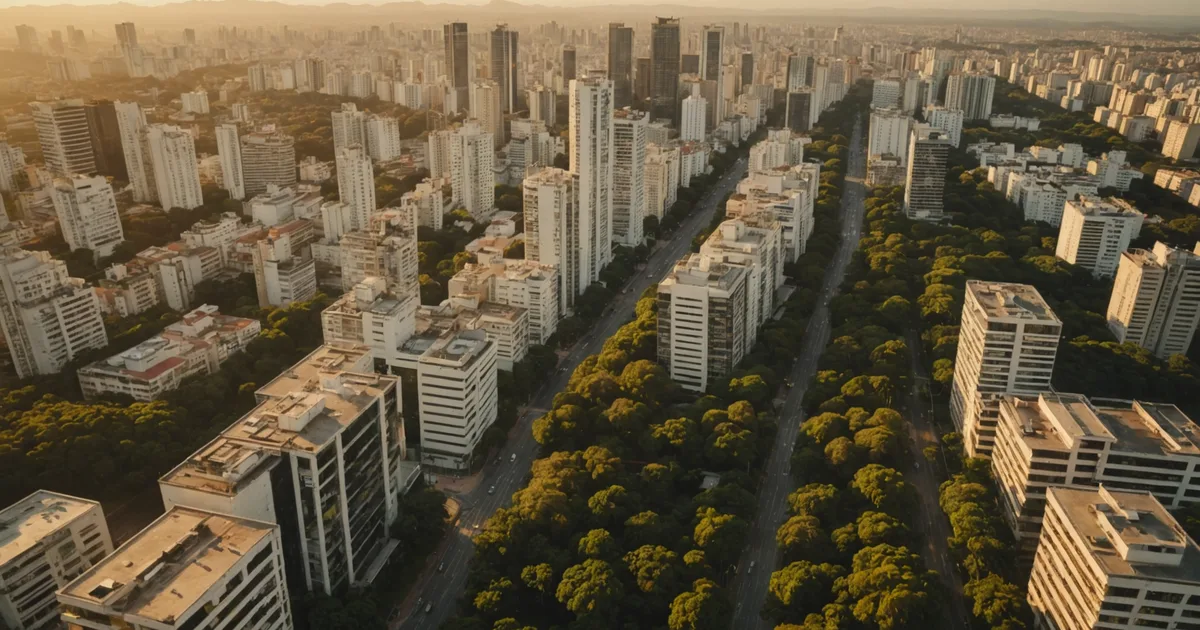
Sao Paulo is one of the most logistically demanding retail environments in the world. A metro area of 22 million people, traffic that rivals Mumbai, a mixed-formality retail economy, and a consumer base that has fully normalized ordering for same-day pickup on their phones. Building a dispatch product here forced us to understand conditions that don't exist in the same way in London or Chicago, and some of those conditions are shifting fast in 2026.
This post is about what we're observing, not predicting. We're a small team working directly with stores in the Sao Paulo metro, and this is what's changing on the ground.
Curbside Pickup Is Now a Baseline Expectation
Three years ago, curbside pickup in Brazilian retail was a pandemic-era experiment that most chains hoped to phase out as foot traffic returned. In 2026, it's an expected service tier. Stores that removed their curbside option after 2022 saw measurable churn among their online-order customers. The expectation that "I ordered online and can pick up without leaving my car" is now baked into consumer behavior in Sao Paulo's middle-income districts, particularly in neighborhoods like Pinheiros, Mooca, and the ABC industrial-residential zone.
What's changed operationally is that curbside is no longer handled ad-hoc. Stores that retained the service are now separating it into a distinct physical zone (not just a counter queue with an "I'm outside" note), and they're integrating the curbside zone into their dispatch sequencing. Orders for curbside pickup have a different urgency model than in-store counter pickup: a customer in a car cannot wait 15 minutes without blocking a parking lane or a traffic flow.
The Courier Layer Is Fragmenting
In 2023, the dominant model for retail courier dispatch in Sao Paulo was a single platform relationship: a store contracted with one gig-logistics operator for all their same-day deliveries. That model is fragmenting. By early 2026, the stores we work with are running between two and four courier platform integrations simultaneously, and they're making per-order decisions about which platform to dispatch through based on real-time availability signals.
This creates a sequencing challenge that didn't exist two years ago. When you have one courier platform, dispatch is simple: call the platform, get a courier, confirm. When you have three platforms with overlapping but non-identical coverage zones, service tiers, and response times, the dispatch layer needs to evaluate platform options as part of the same sequencing decision it makes about which order to dispatch first.
That's a non-trivial increase in complexity. The stores handling it well are those that have centralized the platform selection into their dispatch software rather than expecting counter staff to evaluate it manually on each order.
Micro-Fulfillment Centers Are Emerging, Slowly
The concept of micro-fulfillment: small automated or semi-automated picking centers embedded in or adjacent to retail locations, has been discussed in Brazilian retail circles for several years. In 2026, we're finally seeing early deployments, primarily in the food and convenience grocery segment. These are not the fully robotic fulfillment operations you see in northern European grocery chains. They're smaller, more manual, and more focused on reducing picking walk distance than on full automation.
For dispatch, micro-fulfillment introduces a new variable: the order may be fulfilled from a different physical location than the store address the customer dispatched to. A customer who placed an order at a store in Perdizes may have their order picked at a micro-fulfillment point 300 meters away and transported to the store counter for courier handoff. The dispatch system needs to know the actual ready-point location, not just the store address, to give accurate courier ETAs.
We're not yet seeing widespread micro-fulfillment adoption in non-grocery retail, and we'd be skeptical of predictions that it will arrive quickly. The capital investment is significant and the operational integration complexity is high for stores that aren't already running sophisticated inventory management.
Peak Windows Are Shifting
The 12-to-2 pm lunch window has traditionally been the hardest dispatch window in Sao Paulo retail. That pattern holds in 2026, but a secondary peak has been developing: the 5-to-7 pm post-work window, which used to be lighter than lunch, is now roughly comparable in order volume at many stores. The working hypothesis is that remote and hybrid work patterns have spread purchasing behavior more evenly across the afternoon, reducing the sharp lunch peak slightly while raising the evening shoulder.
For operations planning, this means you can no longer staff for a single daily peak. You need a sequencing and staffing plan that handles two peaks per day and a meaningful mid-afternoon base. Stores that built their counter staffing model around the 2020-era single-peak assumption are discovering that their evening shifts are understaffed relative to actual order volume.
What This Doesn't Change
I want to be careful not to overstate the pace of change. Many of the structural challenges in Sao Paulo retail logistics are not new and are not changing quickly. Traffic predictability remains poor, and no dispatch system resolves a courier caught in a Marginal bottleneck. Infrastructure for curbside (dedicated curb space, clear signage, enforcement against double-parking) is inconsistent across the city and improving slowly. The mixed-formality courier market means that courier quality and reliability varies significantly, and the dispatch system can sequence around that variability but can't eliminate it.
The fundamentals of the dispatch problem, matching orders to couriers efficiently, staging orders so handoff is fast, and managing queue depth during peaks, haven't changed. What's changing is the complexity of the inputs: more platforms, more pickup formats, and two meaningful peak windows instead of one. The stores that are adapting well are treating dispatch as a technology problem, not just a staffing problem, and building the infrastructure to handle that complexity systematically.
That's why we're building PickNGo here first. These conditions are harder than most markets, and solving for them means the tools generalize well when we eventually expand beyond Sao Paulo.